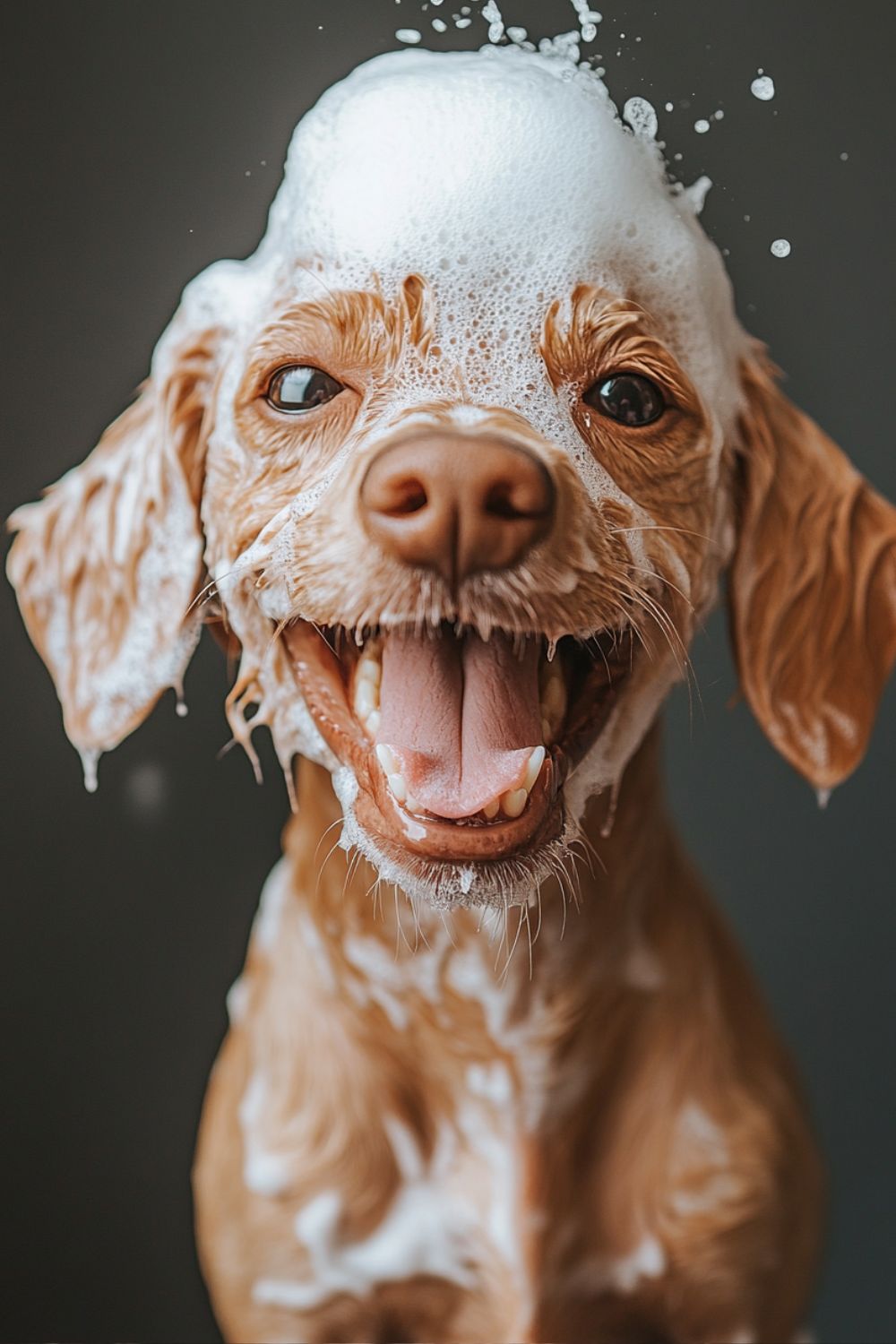
All kinds of pit bulls have a square-shaped head, a flashy square nose, and large almond-shaped eyes.
And for sure all their coats are short and smooth. They all need minimum bathing and brushing.

They have long and straight tails, and they have ears which seem to be rose-shaped, except on cases when they are cropped.
Why are pit bulls tails so strong?
Pit bull breeds are not traditionally ones that have their tails docked, as to other breeds.
Tail docking is very common amongst breeds as Rottweiler, Doberman, Boxer, and even few hounds.
If one has thoughts about tail-docking, be aware of a few things before carrying it out. Tail-docking for pit bulls is not common, but when it’s done it is usually done for looks.
Pit bulls are usually seen with their ears cropped, although, on some occasions, the tail can be docked.
Most people have the belief that it enables the tail to avoid hitting things and getting potential injuries.
While some people are of the view that ear-cropping and tail-docking are practices that are cruel, because it has no medical reason to back them
If an individual decides to dock a pit bulls tail, consider their age and the reason for cutting it.
Docking the pit bulls tail will not provide them with advantages over keeping the tail, moreover.
So keeping the pit bulls tail is also fine, and there won’t be a need to worry about infection or recovery. But in all, always carry out the best action towards the pup.
And as done with most health-related things, ensure that the use of professional help is used when it comes to tail-docking.
Why do all pit bulls tail hurt?
This disorder happens when the pit bull wags its tail with enough force to cause hematoma, cuts, or injuries to the skin, when the tail comes in contact with a hard surface.
Causes of happy tail syndrome in dogs
The disorder happens because the dog has its tail wagging with enough force to cause hematoma, cuts, or injuries to the skin, when the tail comes in contact with a hard surface.
It is not very common in smaller dogs as they are not able to wag their tails with enough force that will cause damage.
However dogs that have thicker furs and thicker tails are provided some protection because of the musculature of the tail and padding done by the fur.
Diagnosis of happy tail syndrome in dogs
A veterinarian would probably check the patient’s overall health and well-being by carrying out an examination of the dog’s general physical.
It includes examining the dog’s respiration, heart rate, and temperature.
The veterinarian would clean and check out the wound thoroughly to discover the depth of the damage and to know if there are external signs of infection, as in foul odor or discharge.
When an infection is suspected then a standard blood test, like a complete blood count and a biochemical profile, may aid to reveal if an increased white blood cell count is present. Indicating the presence of an infection.
The injury might also get swabbed, and culture could be done to discover the kind of infection present.
In occasions where severe damage has been done, the veterinarian might decide to image the damaged area, the use of x-ray and maybe ultrasound technology in order to discover damaged ligaments or tendons or broken vertebrae.
Treatment of happy tail syndrome in dogs
This treatment is done according to the severity of the wound and the frequency of reoccurrence of the syndrome.
In the mildest happy tail cases, there will be a need to wrap the tail, to keep it from getting damaged again, for in moderate situations a suture or two may be needed.
The task of wrapping the dog’s tail tip is easier said than accomplished, because of the shape and motion of the appendage.
But the veterinarian would guide the individual who owns the dog through the steps.
Most dogs need an Elizabethan collar to disallow them from chewing on or getting off the bandage.
In some case, the veterinarian could recommend a special appliance made to get the dog’s tail relatively still, giving little discomfort as possible.
If a bacterial or a viral infection has been found, the doctor that examined will prescribe the essential antibacterial or antifungal medication.
In some rare situations, the dog might have broken some its vertebrae in the tail, and there might be a need for a cast to enable it to heal properly.

Recovery of happy tail syndrome in dogs
Happy tail syndrome could take up a couple of weeks to heal, and as this happens, it is essential to make sure that the bandages stay clean and dry.
If the bandage on the tail gets wet, it should be brought off and rewrapped as soon as possible, and even when it is clean and dry, it must be removed, examined for infection, rewrapped in two or three days to deny new infections from growing.
Quite a number of dogs get their tails injured repeatedly, giving them high risk of getting dangerous infections.
In cases that are chronic, amputation of the tail or part of it, maybe the option left.
Do you have to cut a pit bulls tail?
If an individual has a pit bull with a docked tail, one might like the little numb that is left and feel it’s fine. Although, many people dislike docked tails and feel it is unfair to the dog.
How do I take care of a dog with a docked tail? If a professional veterinarian carried out the operation, then there should be a set of instructions.
The dog’s condition should be monitored and ensure they don’t open the wound or get an infection.
Why are docking tails allowed for work dogs?
Due to the reason that a work dog could get its ear cropped. Science informs us that the process is highly cosmetic, that means it gives no gain to a “pet”.
A work dog could hunt other animals, and the tail is the sensitive spot for the dog.