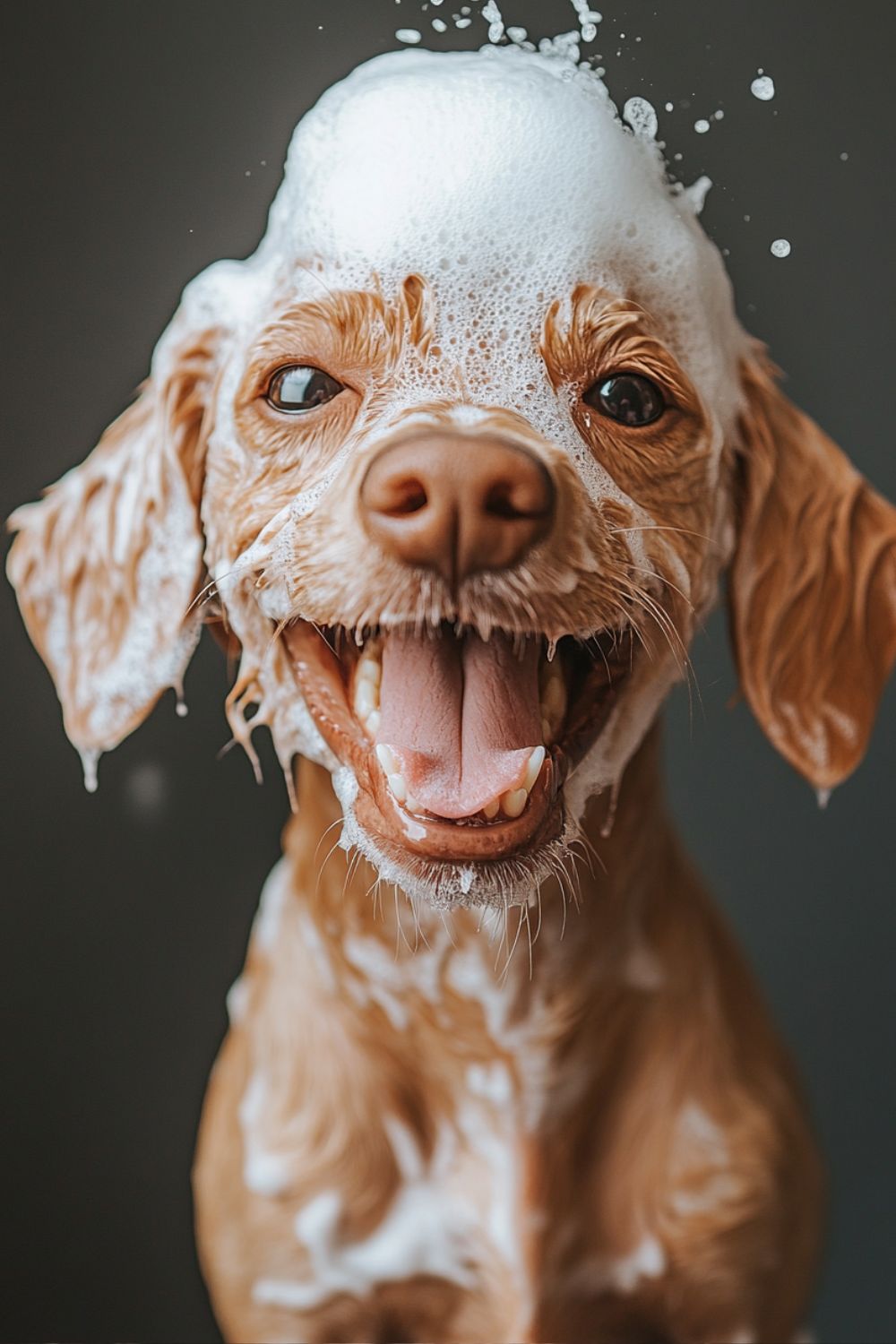
You may think that all Labradoodles or Australian Labradoodles do not shed, but the truth is that some do shed, and some do not.
Do F1B Labradoodles shed? Whether a labradoodle sheds or not depends on the parent’s dogs and genetics.
Furthermore, I need to throw more light on shedding. Every dog sheds. Some dogs have fur coats and shade every day. Some shed before a hot season sets in.
Dog’s hair grows to a certain length, drops, grows to a certain length again, drops again, and the circle continues.
This is what is known as shedding. The fur of some breeds of dogs is long, while some are short. Here I am talking about the length the hair grows to before it sheds.
Just as we humans, dogs, like poodles, have hair coats. Once in a while, you will see them litter the house with their hair by pulling out small clumps of hair.
You, as a dog owner, need to groom the dog, if you do not, their coat will overgrow.
Do F1B Labradoodles shed?
Do not forget the belief that a F1B does not shed or is allergy friendly is just about 50%. This depends on the first generation of the parent Labradoodle and the Poodle coat.
Some F1B’s have super curly hair like a poodle, while some are flat-coated, and still shed as much as the Labradors shed. This happens where the short coat is the dominating gene.
No other breed of dog in the world crossbreeds like Labradoodles. Many dog owners love them because they are easygoing. Their temperament is very nice, and they are very friendly to children. They relate well with other pets in the house too.
What many people who want to adopt Labradoodles have not come to understand very well is how this breed of dog sheds. This is why we ask, “Do Labradoodles shed?”. Emphatically yes. Labradoodles do shed.
The truth is that no dog is completely hypoallergenic. Labradoodles do shed, but not as much as other dogs. To avoid their shedding being a nuisance in your home, there are control measures you can apply.

Are F1B Labradoodles hypoallergenic?
F1B Labradoodles can be called a non-shedding breed because their shedding rate is minimal. They are good for adoption. This breed of dog is usually regarded as hypoallergenic, and good for people who have an allergy to shedding dogs. Their costs are easy to maintain, however they need to be groomed more than the straight coat Labradoodles.
· Labradoodle Coat Types
Different Labradoodles have different coat types subject to their mix status.
There are various coat types Labradoodles can sport. The variation depends on if they are an F1 or an F1B type. Their coats come in different forms, wiry, thick and curly, or silky soft. Labradoodles do not have an undercoat, so they are single-coated dogs.
The benefit of this is that they shed less hair, and the owner can manage their hair easier than that of other breeds of dogs such as their parent, Labrador Retriever.
They inherited their lower-shedding coat from their poodle parents. Their poodle parent is known as lower-shedding dogs, and they are the best dogs for allergy sufferers.
· Coat Colors
There are so many colors you can see on Labradoodles. They inherit their colors from their different parent breeds.
You will see many of them in golden, golden red, brown, white, and even black colors, irrespective of their sizes. This means that the younger Labradoodles have similar coat color palettes.
Labradoodles can have various coat hues like shades of browns, grays, a blend of red and brown, and more.
This depends on the genetics of their parents. What determines the coat color a Labradoodle develops is the dominant breed in their bloodline.
The coat color of Labradoodles is important to dog owners because they match them with their furniture. You will hardly notice dog fur littered on the chair if your couch and dog are brown.
· Shedding Frequency
Labradoodles shed more when compared to Poodles, but they shed less than other purebred dogs and mixes. Your dog can shed every day, although in a quantity that is not noticeable.
For this reason, you have to be ready to sweep or clean up your house every week.
There may be some hair that will be left over on your chairs or carpet which you will then need to remove. This is subject to the color of the dog, and your chairs.
This is why you need lint rollers, and vacuum cleaners to get your chairs rid of dog hair.
Labradoodles are not seasonal shedders, so the quantity of fur they shed yearly is usually small. It is only in special situations you will see them shed more hair than normal.
· Shedding Triggers
When a Labradoodle is stressed out, it will likely shed more than other mixes.
Some factors can make a Labradoodle shed more than normal. It is natural for a dog to shed when it is stressed out, when it has a skin infection, or if it is allergic to any plant or grass in your home..
· Stress
One of the major reasons dogs shed hair is stress. For many reasons stress, and anxiety can lead to the loss of hair in dogs. Sometimes, Labradoodles are attached to their owners. So, if you leave them at home alone for a long time, they will be stressed out.
Your dog will develop separation anxiety if your work is full-time outside the home. The resultant effect of this will be stress-induced shedding. If you change the dog’s daily routine, it can cause stress and consequently shed.
FAQs
How do I get my Labradoodle to stop shedding?
If you do not want your labradoodle to shed or reduce its shedding rate, bathe it with dog-shedding shampoo once or twice a month.
The loose and dead hair will be washed out of the other hair. Avoid anything that will cause stress for the dog. Stree makes dogs lose hair the way humans do.
What age does a Labradoodle coat change?
Between 6 to 12 months of age, Labradoodle puppies change from their puppy coat to adult coats. You will see their coat thicken and mat. This is the time you have to start grooming them. You must use scissors to cut off the puppy coat.
Why is my F1b Labradoodle shedding so much?
F1b Labradoodle sheds because it inherited a double coat from its parents. That is how genetics works. You can go for a purebred Poodle instead of a mutt if you want a dog that does not shed.
You cannot stop any dog from shedding, but all you have to do is brush the dog every day, and fully groom the dog every 6–8 weeks.